A Checklist for Your First Month of Journalling: Build a Habit That Lasts

Most journals stall in the second week. The first few pages are a pleasure — new notebook, decent pen, good intentions — then a busy Tuesday arrives, the page stays blank, and by Friday it feels like a task you are already failing. The fix is not more willpower. It is a first month with fewer rules, smaller entries and a plan for the days when you cannot be bothered.
What follows is a four-week checklist. Work through it roughly in order, but treat the timings as suggestions. If the week three review lands on day twelve, that is fine. The point is to finish the month with a habit that survives an ordinary, unglamorous week.
Before day one: a ten-minute setup
Set things up now so there is nothing to arrange when it is time to write.
- A notebook you are not precious about. Cheap, plain and small enough to carry beats beautiful and heavy. If there is a half-used notebook in a drawer, use that.
- One pen that lives with it. Keep them together, always. Hunting for a pen is the most common reason a two-minute entry becomes no entry at all.
- A fixed slot in the day. Attach it to something you already do: after your morning tea, on the train, last thing before lights out. A habit with an anchor holds far better than one that relies on remembering.
- Permission. Nobody is marking this. Spelling, handwriting, half-finished sentences and dull days are all allowed.
Ten minutes, then stop arranging. The notebook does not need a cover, an index or a colour-coded system to start working.
Week one: turn up, keep it tiny
The only goal for the first seven days is to open the notebook daily. Aim for three sentences. Date the top of the page, write whatever is actually in your head, and close it. Two minutes counts.
Two rules help. First, do not skip two days in a row — one missed day is life, two is the start of a new habit of not writing. Second, write badly on purpose. The entries you think are dull often turn out to be the ones you are glad to reread in six months, because they are honest.
If you get to day seven with seven short entries, you have already done the hard part. Everything after this is decoration.
Week two: give the blank page something to answer
Some days you will sit down and find nothing waiting. That is normal, and it is not a sign that you are bad at this. Keep a short list of prompts and pick one without deliberating.
A journal is not a record of a perfect month. It is evidence that you paid attention.
Prompts that tend to work:
- What took more energy today than it deserved?
- What did I notice that I would normally walk past?
- What am I avoiding, and what is the smallest version of it?
- Three things that went right, however small.
- What would I say to a friend who had my day?
Set a timer for five minutes if you tend to overthink. When it goes, stop mid-sentence if you like. A page you leave unfinished is much easier to return to than a page you were trying to make impressive.
Week three: add a weekly review
Daily entries collect; a weekly review makes sense of them. Fifteen minutes, same time each week — Sunday evening and Friday morning are both popular for good reasons. Here is a simple shape:
- Read back over the week quickly, without editing or judging.
- Circle one line that still feels true.
- Note one thing worth repeating and one thing worth dropping.
- Write a single sentence of intention for the coming week.
The pitfall here is turning the review into a rewrite. Resist tidying the original entries. Their value is in being rough and dated, not polished.
Week four: make it yours
By now you know which parts you enjoy. Add one thing — just one — that suits the way you think. Lists, sketches, song lyrics, a line from a book, a mood word at the top of the page, a short letter to yourself a year from now, ticket stubs and receipts taped in. Equally, cut anything that bores you. If the daily entry has quietly become a mood log, let it. If you would rather write twice a week at length, do that instead.
Adding one element a week is a sensible pace. Changing everything at once is how a working habit becomes a project you abandon.
When it goes wrong: gentle troubleshooting
You have missed a week
Write one entry today and carry on. Do not attempt to catch up on the days you missed. Backfilling is tedious and turns a habit into homework; a gap of blank pages is not a debt.
The writing feels flat
Change the question, not the notebook. Swap "how was my day?" for something concrete: what someone said to you, what you ate, what you are dreading. Detail is what makes an entry worth rereading. Abstract summaries rarely are.
It has started to feel like a chore
Shorten it. One sentence is a legitimate entry. Alternatively, drop to three set days each week for a fortnight and build back up. Consistency over months matters more than volume on any given day.
You are worried about who might read it
Decide this before it becomes a reason to censor yourself. Some people keep a locked drawer or a box; others prefer a notebook that looks unremarkable on a shelf. If you write on a phone or tablet, remember that anything connected to an account can sync somewhere you did not intend, so check your settings.
One thing worth saying plainly: if writing regularly starts bringing up distressing material that you cannot put down, that is a good moment to speak to your GP or a qualified professional rather than pushing through alone.
Your first month, in one page
- Set up in ten minutes: notebook, pen, one fixed slot, no perfectionism.
- Week one: a dated entry every day, three sentences is enough.
- Week two: keep a short prompt list for blank-page days.
- Week three: review the week for fifteen minutes and set one intention.
- Week four: add one element you enjoy, drop one you do not.
- Then: never miss twice, and never catch up on missed days.
At the end of the month, read the whole thing from the first page. You will not find a tidy record of a well-run life. You will find a month you actually noticed, in your own handwriting, which is a decent return on two minutes a day.
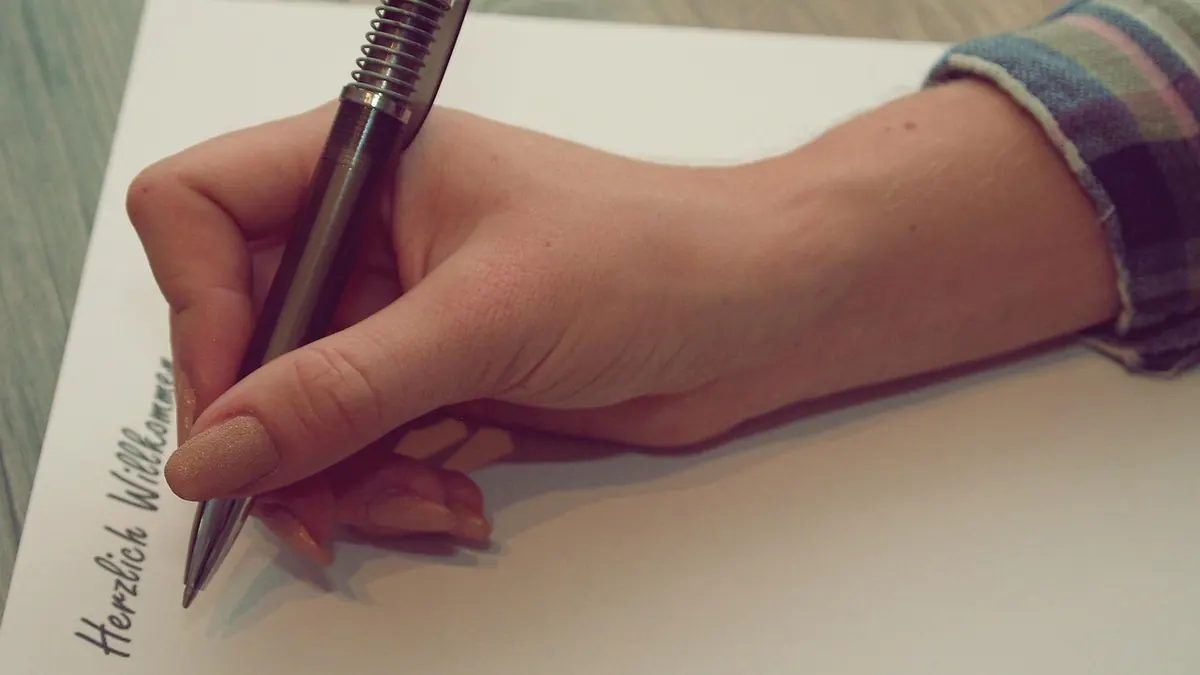
Photo: Pexels / Pixabay