How to Start a Daily Journalling Habit in 15 Minutes a Day

Fifteen minutes is a strange amount of time. Long enough for a proper cup of tea and a chapter of a book; short enough that it can vanish into the school run or a scrolling session without you noticing. That is exactly what makes it a sensible size for a daily journalling habit. You are not asking for a new hobby or an hour of silence. You are asking for a quarter of an hour and somewhere to put your thoughts, every day, more or less.
The trick is to stop treating journalling as a mood that has to strike, and start treating it as a small piece of admin you happen to enjoy. Here is how to set that up so it survives work, children, and the days when you have nothing left to give.
Why a small daily entry beats an ambitious weekly one
A page a day fills a book in a year. An hour every Sunday fills one in about three years, which is usually the point at which the book gets lost behind the sofa. Repetition is what makes a journal useful, and repetition is easier to protect when the commitment is small.
Short entries also keep you honest. With a timer running, there is no time to compose a polished version of yourself for the page. You write the first thing that arrives, which is usually the thing worth keeping.
Anchor the habit to something that already happens
New habits settle best when they are attached to an existing one. Choose a moment that already repeats, then let journalling ride along behind it.
- With the first drink of the day. Kettle on, mug down, notebook open. You write while it cools.
- On the commute. Phone in aeroplane mode, notes app open, fifteen minutes of tapping with your thumb. Nobody around you will notice or care.
- At lunch, outside. A bench, a sandwich, three paragraphs. It also gets you away from your desk.
- Before sleep, phone in another room. The last thing you do before lights out, which has the useful side effect of keeping you off a screen.
Pick one. If the morning slot fails for a fortnight, swap it wholesale rather than alternating. A habit with two possible homes usually ends up with none.
Take the decisions out of it
The reason most good intentions die at nine in the evening is that they arrive with questions attached. Where is the notebook? Has the pen dried out? What am I supposed to write about? Every unanswered question is another chance to close the cover and do something easier instead.
So answer them now. One notebook, always in the same spot. One pen that lives with it. If you would rather type, one document or one note, pinned so it opens first. Then decide the shape of an entry in advance, so that sitting down requires no thought at all.
A five-line format that runs on autopilot
- Today, in one sentence.
- One thing that went well.
- One thing that snagged.
- One thing I am carrying into tomorrow.
- One line about nothing much: the weather, a song, what you had for lunch.
That fifth line does a lot of quiet work. It stops the whole exercise feeling like a performance review, and it reminds you that a diary is a record of a life rather than an audit of one.
What to write when you feel you have nothing to say
You do have something to say. You have simply decided it is not interesting enough. Lower the bar until it stops being a barrier.
Lists are the fastest way through a blank page. Write five things you noticed today, or three things that made you laugh, or everything you can remember about the last hour. If you would rather be handed a starting line, borrow one of these:
Today I kept thinking about… / The thing I have not said out loud is… / If tomorrow were cancelled and today repeated, I would want to remember…
You could also write about what you are reading, who you spoke to, or the argument you replayed in the shower. Ordinary detail ages better than it seems. A note about a broken boiler will tell you more about a year than any summary of how you felt about it.
Low-energy days: write the three-sentence version
Some days you will sit down hollowed out. Write the short version anyway. Three sentences is a complete entry: Tired. Rained all day. Sam fell asleep on the sofa before the credits.
That is not a failure to journal properly. It is journalling on a bad day, which is rather the point. You are protecting the habit, not the word count. Keep a minimum you can always manage, whether that is one sentence, the date, or the weather, and write that on the evenings when nothing else will come.
Missing a day does not undo the habit
You will miss days. Possibly a fortnight. What separates people who keep a journal for years from people who start one every January is not consistency; it is what happens next. The rule that helps is simple: never miss twice in a row.
When you come back, start with today. Do not backfill the missing entries, do not write an apology to the notebook, and do not attempt a four-page catch-up explaining why you stopped. Both of those turn a small lapse into a large chore, and chores get abandoned.
It is also worth deciding what the journal is not. It is not a to-do list, unless you want it to be. It is not evidence for an argument you intend to have later. And it is not a place where you have to be positive. A diary that only records good days is one you will stop trusting.
Your first week
Tonight: put the notebook where you will sit, unfold the pen, set a timer for fifteen minutes and write the date. Then write one sentence about today. Tomorrow, do the same.
By the end of the week you will have seven entries, and the sitting down will already feel easier than the deciding. That is the whole method: fifteen minutes, one fixed moment, and a page that does not have to be good. If journalling starts to raise something heavier than you expected, a persistent low mood or a worry that will not settle, it is worth talking it through with your GP or another qualified professional. A notebook is a good companion, but it is not a substitute for help.
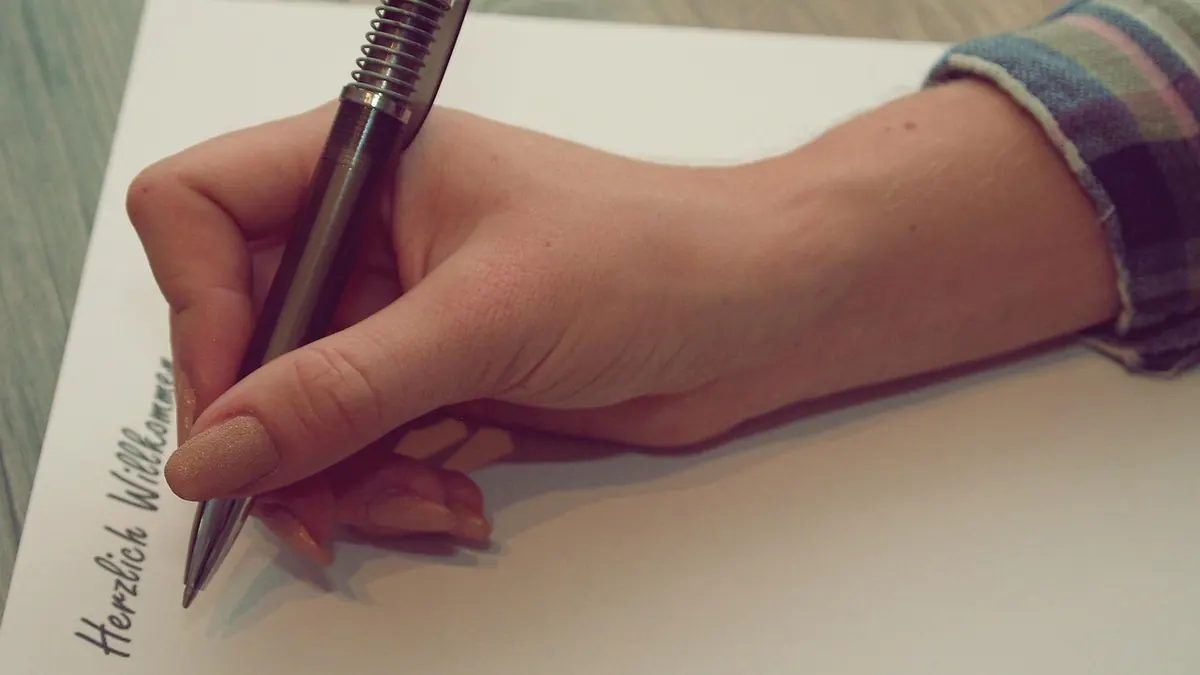
Photo: IqbalStock / Pixabay