Common Journalling Mistakes Beginners Make and How to Fix Them
Most journals start the same way: a new notebook, a good intention, and a promise to write every night. Three weeks later the notebook is in a drawer and the promise has curdled into a small, quiet sense of failure.
Almost none of that is about discipline. It is about the rules people invent before they have filled a single page — rules about how an entry should look, how often it should appear, and who might one day read it. Loosen those rules and the writing becomes easy again.
Waiting for the perfect notebook
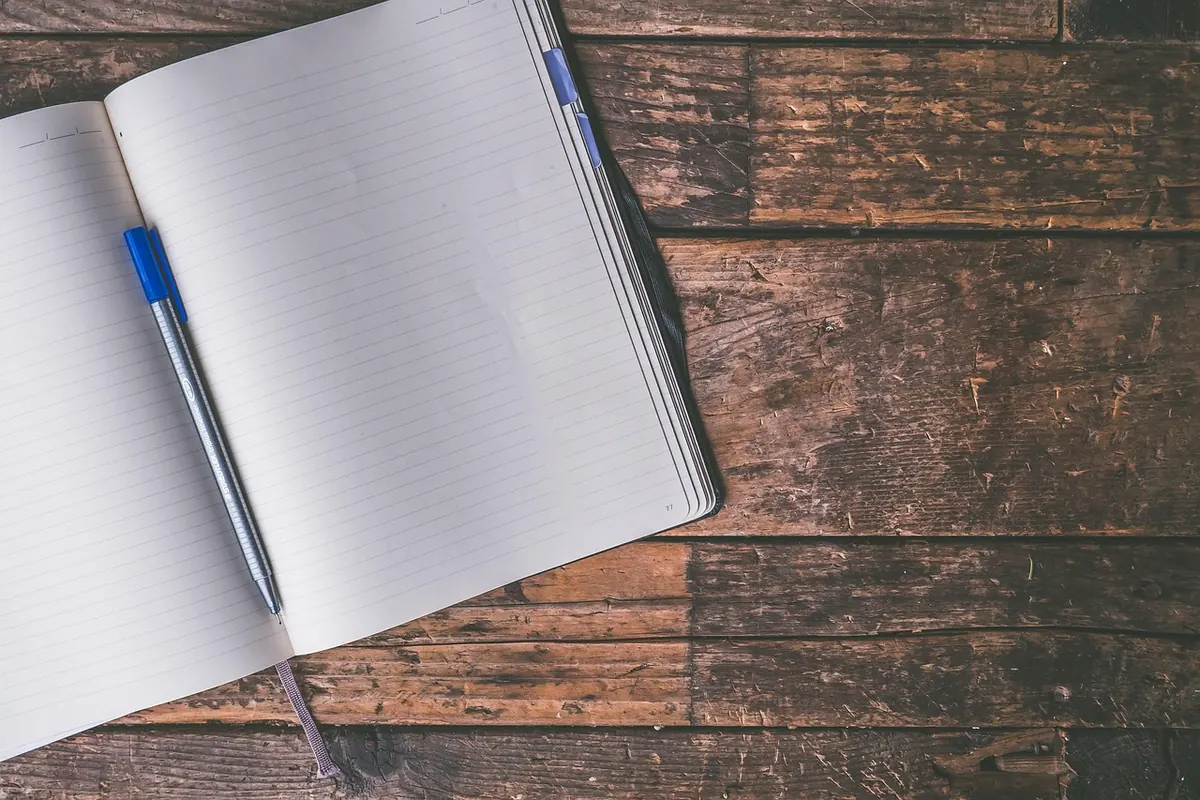
The nicer the notebook, the more precious the first page. A linen-bound book with thick cream paper is a lovely object, and lovely objects make people hesitate. You want the handwriting to match. You want the opening entry to be worthy of it. So you sharpen a pencil, admire the spine, and put it back on the shelf.
The fix is to separate the nice notebook from the working one. Buy a cheap exercise book — the sort with a red margin — or use the notes app on your phone. Neither is precious, so neither can be ruined. If you already own the beautiful one, start on page forty instead of page one, or write in pencil until the fear wears off. There is no rule that says a journal has to begin at the beginning.
- Write the date, and nothing else, if that is all you have in you.
- Let words be crossed out. Mess is evidence of thinking, not failure.
- Open with something deliberately dull: “It rained. I ate toast standing up.”
- Keep a pen tucked inside the cover so nothing has to be found before you can write.
Treating consistency as a test you can fail
Missing a day is normal. Deciding that one missed day has ruined the whole project is what ends most journals. It is the same instinct that makes people abandon a diet after a single slice of cake — the sense that a streak, once broken, is worthless.
If counting days motivates you, count them. If it makes you anxious, stop counting days and count weeks instead: did I write three times this week? That is a far more forgiving target, and it survives a busy Tuesday. Aim for two or three sessions a week rather than seven, and attach the habit to something you already do without thinking — the kettle boiling, the last ten minutes before you turn off the light, the train journey home. The entry can be three sentences. It can be one line. A journal that exists is worth more than a perfect one that doesn’t.
Writing for a reader who isn’t there
You imagine your future self reading it back. Or a biographer. Or the person who might find it while looking for a charger. So you edit as you go, smoothing the awkward parts and writing the version of the day that sounds better than the day actually was.
That instinct is worth naming, because it is the difference between a journal and a performance. Write “no one is reading this” at the top of a page if it helps. Write the unflattering thing. Say the petty thing, the jealous thing, the thing you would never say aloud.
If you genuinely worry about someone finding it
That is a practical problem with a practical answer. Use a locked drawer, a password-protected file, or a small fireproof box if the contents matter to you. Decide in advance what should happen to it and tell someone, or leave a note inside the front cover. Once the question of who might read it is settled, you can stop editing for them.
Expecting every entry to be deep
Not every page is a revelation. Most are weather, tiredness, what you had for lunch, and a sentence about the colleague who talks over everyone in meetings. The insight arrives later, in the accumulation, when you notice that the same worry has appeared four times in a month.
Give yourself permission to be boring, and rotate the kind of entry you write:
- A log. Plain facts. What happened, who was there, what you did.
- A complaint. Everything irritating you, unedited and undignified.
- A question. Something you are chewing over, written as a question rather than a conclusion.
- A record. One small thing worth keeping: what the kitchen smelled like, what someone said, the song that was playing.
Specific detail is what makes old entries worth returning to. “Good day” tells you nothing in five years’ time. “Walked to the canal, the swans were fighting over bread, I laughed properly for the first time in weeks” tells you everything.
Recording only the bad days
Many people reach for the journal only when something has gone wrong. The result is an archive of grievances. Read it back after a year and you would conclude that your life was a sequence of arguments, bad sleep and difficult Wednesdays, which is neither true nor encouraging — and an untrue journal is one you will stop opening.
So balance it deliberately. At the end of an entry, add one specific good thing. Not gratitude as a chore, and not something vague like “family”. One sentence: the woman at the bakery remembered your order; the light on the way home was the colour of weak tea. Two lines of good to every ten of bad is enough to keep the picture honest.
It is also worth being clear about what a journal can and cannot do. Writing things down helps you notice patterns, and noticing patterns is genuinely useful. It is not a substitute for proper support. If you are dealing with grief, persistent low mood, or anxiety that will not shift, speak to your GP or another qualified professional rather than trying to write your way through it alone.
A ten-minute reset for your next entry
Forget the backlog. You do not need to catch up, and you certainly do not need to explain the gap. Try this instead, once, and see how it feels:
- Pick up the cheapest notebook in the house.
- Set a timer for seven minutes, or commit to three sentences — whichever you will actually finish.
- Write one plain fact about today.
- Write one thing you would rather not admit.
- Write one specific thing you want to remember.
- Close the book and leave it somewhere you will see it tomorrow.
That is a complete entry. No introductions, no summaries, no attempts at wisdom. Do it three times this week and you will have something more valuable than a perfect journal: a habit that survives ordinary life, and a record of it that sounds like you.
Photo: KoolShooters / Pexels